

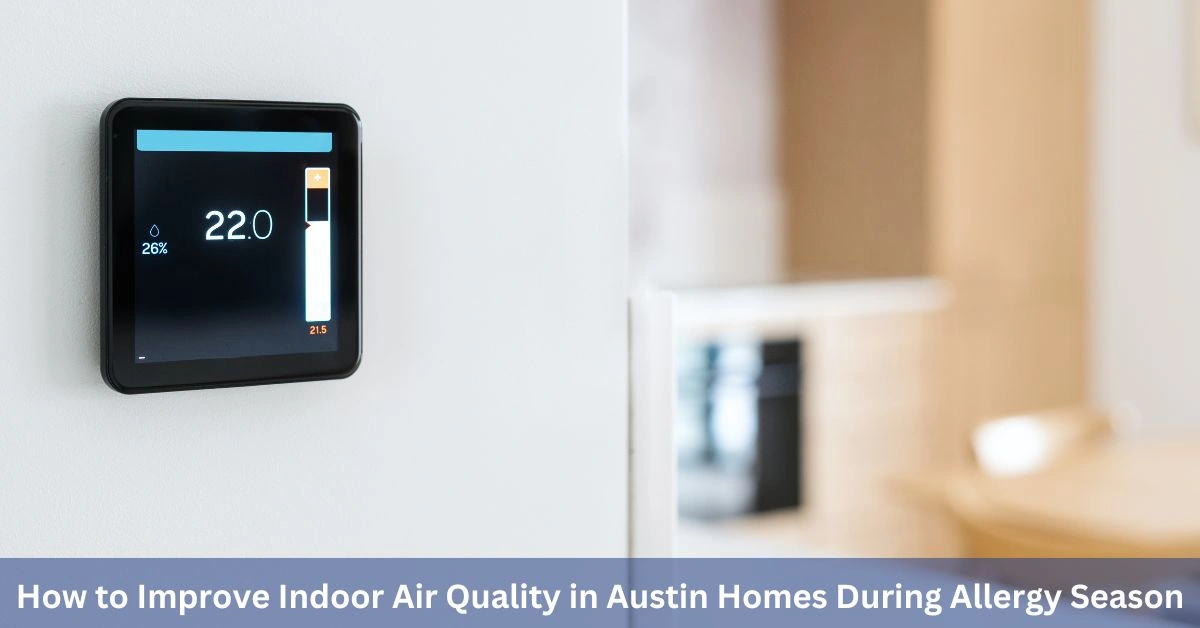
Austin has a challenging climate with year-round allergy season. Every season comes with a unique set of allergens here. They cause respiratory issues, discomfort, skin irritation, and other related diseases. Focusing on improving indoor air quality is essential to avoid allergens and lead a healthy life.
In this guide, I’m going to share how to improve indoor air quality in Austin homes during allergy seasons.
Key TakeawaysTo improve the indoor air quality in Austin homes during allergy seasons, you should consider strategies like:
Follow these strategies to keep indoor air allergens-free and healthy. Consult any HVAC service in Austin, TX for your specific air conditions. |
Different Allergy Seasons in Austin, TX
Austin, Texas creates different allergens in different seasons. So, people consider the region to have allergy season nearly all year round. Here are the various allergens you may face in different seasons in Austin.
| Seasons | Months | Allergens |
| Winter | December to February | Mountain cedar pollen |
| Spring | March to May | Tree pollen from oak, elm, pecan, and ash trees |
| Summer | May to August | Grass pollen from Bermuda, Johnson, and rye grasses |
| Fall | September to November | Ragweed pollen |
All of these pollens are airborne and work as allergens. These may cause respiratory issues, skin irritation, sneezing, nasal congestion, coughing, itchy throat and eyes, etc.
Additionally, the dust, dirt, mold spores, pet dander, etc. are persistent all year round. That’s why you have to keep the air quality good in all the seasons in Austin, Texas.
Key Strategies to Improve the Air Quality During Allergy Seasons in Austin
Here are the key strategies suggested by HVAC Express and other experts to improve air quality during allergies:
1. Conduct Regular HVAC Maintenance; Specially Cleaning
This is the most important consideration. Hire an expert HVAC service in Austin, TX to conduct the maintenance activities. These activities include:
- Cleaning all parts or components so that there is no accumulated dust.
- Replacing the air filters every 1 to 3 months based on the dust accumulation level of your home.
- Using high-efficiency air filters like HEPA filters or MERV-rated air filters.
- Fixing any other issues that occur.
Taking these steps keeps the HVAC efficient. Thus, the system can ensure fresh and healthy air circulation. Consider using an additional whole-home air purifier to eliminate pollutants and allergens from the indoor air.
2. Ensure Effective Ventilation
Proper ventilation removes the stale air from indoors and circulates fresh air.
If you do not vent out the stale air, it will encourage allergens and spores’ growth. Different pollen may also get in through windows and doors. Using ERVs is a good solution.
ERVs eliminate stale air and bring in fresh filtrate air. Use exhaust fans in your bathrooms and kitchens to aid the process and avoid mold growth.
Home insulation level is another important factor. Good insulation prevents the pollen from getting in and increasing allergens indoors. Consider using weatherstripping and caulk to seal the windows and doors in allergy seasons.
3. Incorporate High-Quality Air Purifiers
While HVAC efficiency keeps the indoor air fresh, air purifiers can keep you ahead during allergy seasons. It is an extra addition for improved air quality.
Many air purifiers have been hyped in recent times. Consider choosing HEPA Air Purifiers, Whole-Home Air Purifiers, or Activated Carbon Air Purifiers.
4. Control the Humidity Levels
Excessive humidity levels are harmful to the air quality. It feels uncomfortable and creates a favorable environment for mold growth. Mold, mildew, dust mites, etc. increase inside the house because of it. All of these initiate allergies.
To tackle this situation, install a humidifier or dehumidifier. HVACs also have built-in humidity controllers. Aim to keep the humidity level within 30% to 50%.
Moreover, keep the damp areas of your house clean.
5. Use Natural Air Quality Boosters
Natural air quality boosters improve indoor air quality by keeping the air fresh and allergen-free.
They are also cost-effective. HVAC Express, providing expert HVAC Service in Austin, TX suggests incorporating these natural boosters:
- Add indoor plants to your house. They absorb the impurities and toxins from the air keeping the air fresh. Spider Plants, Peace Lilies, or Areca Palms are some of the good choices.
- Place activated charcoal bags in different areas of your house. They effectively trap pollutants, allergens, and odors. However, replace these bags every 2 to 3 months.
- Use an essential oil diffuser and add a few drops of essential oils. Certain essential oils like Tea tree oil, Lavender oil, and Eucalyptus oil include antimicrobial and anti-inflammatory properties. They can eliminate airborne irritants, mold spores, allergens, and other bacteria from the indoor air.
- Place Himalayan salt lamps and turn them on daily to reduce allergens like dust and pollen.
6. Monitor the Air Quality and Take Action Accordingly
Use Indoor air quality (IAQ) monitors to detect the presence of pollutants or allergens in the air. It is particularly helpful for Austin’s allergy seasons. You can identify if the air quality is good or if you need to take action to improve it.
If allergens are detected take actions like using air purifiers, high-efficiency air filters, dehumidifiers, natural air quality boosters, etc. Consult an expert like HVAC Express to suggest accurate steps for your specific conditions.
Final Thoughts
Improving the air quality in Austin, TX is essential for a better and healthier indoor environment. Polluted and stale air can make you sick, and increase respiratory issues, discomfort, skin irritation, and cause other issues.
Incorporate highly efficient air filters, air purifiers, humidity controllers, home insulation, and other natural air quality boosters to keep the air allergens free. Do not overlook regular HVAC maintenance activities including cleaning. Consult an HVAC Expert like HVAC Express to help you throughout the process.


