
Imagine you work hard all day in the 30°C in Texas. When you come back home, turn the AC on, and it starts giving you the same scorching heat by blowing warm air inside your own comfort place!! Quite frustrating, right??
Well, not anymore, because in this article you will get to know all the possible ways why your AC is not passing cool air, what you can do in this situation, when you need to hire a technician, and how to maximize the coolness of your own comfort zone.
Components of an Air Conditioner
Every AC Unit has 4 main parts-
- Compressor
- Condenser
- Evaporator
- Expansion Valve
There are some additional elements that are connected to these parts, such as:
- Air Filter
- Refrigerant
- Fan
- Thermostat
- Blower Motor
- Electrical Wiring
- Crankcase Heater
- Ductwork
- Capacitor
- Contactor
- Drain Line
How AC Works
In simple words, AC works in a continuous loop. It collects warm air and heat inside from your home, moves it outside with refrigerant.
After releasing the heat, the refrigerant comes back again to collect heat. The cycle keeps repeating until the temperature gets to a desirable state.
Why Your AC Blows Warm Air with Possible Fixes
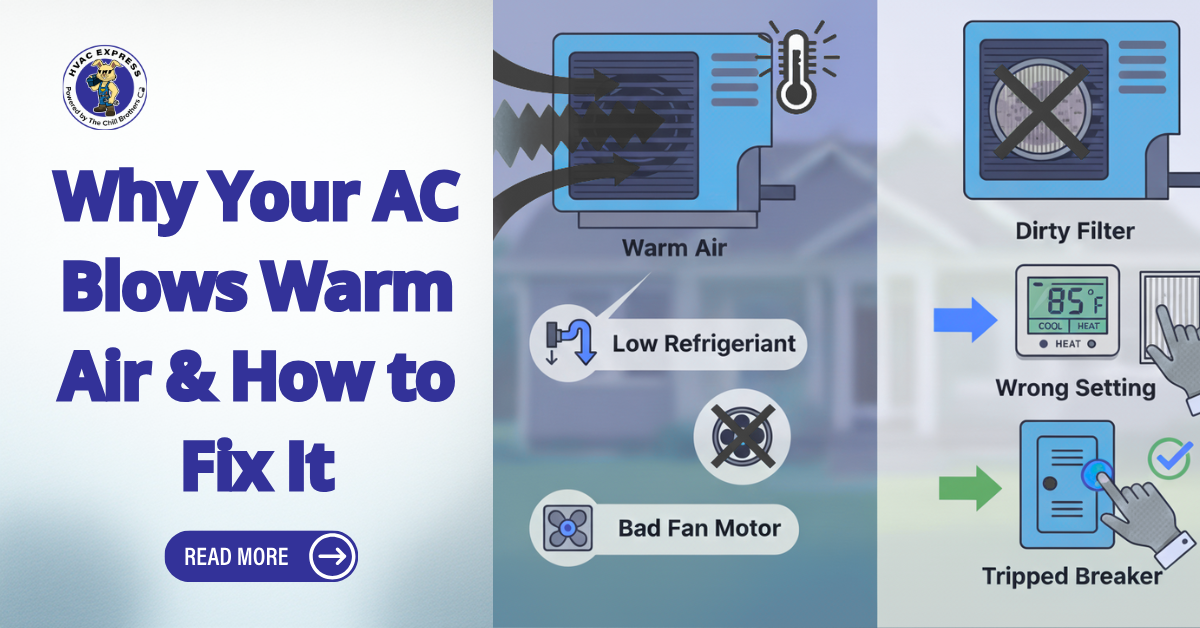
Your AC might be pushing out hot air for various reasons. It includes refrigerant, airflow, outdoor unit, thermostat, and system issues.
1. Refrigerant Issues
1.1. Low Refrigerant Charge
Refrigerant is the chemical that collects and releases heat in an air conditioner.
Over time, vibration and corrosion cause wear and tear in AC components. It includes the refrigerant line. Besides, poor joint connections, improper AC installation, and manufacturing defects also play a part in lowering refrigerant levels.
Some signs to detect low refrigerant issues are:
- Longer running times
- Ice buildup on evaporator coils
- Hissing or bubbling noises
- Higher electricity bills
Fixes: Since lower refrigerant levels are caused mainly by leaks in the refrigerant lines, the leaks need to be treated first. Identifying the leaks and recharging refrigerants requires a proper detector and manufacturer-approved machinery, which aren’t available for most users.
So, for reliable HVAC services in Austin, companies like HVAC Express can recharge refrigerant safely after fixing leaks.
1.2. Refrigerant Leaks
Any crack, hole, or loose connection in the refrigerant lines, coils, or other components that loses refrigerant causes leaks. Continuous operation, especially in summer heat, is responsible for stress in the refrigerant lines and connections, which leads to leakage. Salt (in coastal areas) also hastens corrosion.
Fixes: A professional examination of the detection and repair is a must. Technicians will run a thorough system check to ensure there is no other leak present after repairing.
2. Airflow Problems
2.1. Dirty Clogged Air Filter
There are so many factors that contribute to filter blockage:
- Dust
- High pollen count during spring and fall
- Ungroomed pets, especially with long and dense fur
Besides restricted airflow and reduction in cooling, blocked air filters freeze up the evaporator coil and put strain on the blowing motor.
Fixes: Manual monthly checking, replacing the filter every 3 months, and using the correct size and type of filter will solve this kind of problem.
2.2. Blocked Vents or Registers
Furniture or curtains often block unintentionally in vents and registers. Sometimes, homeowners close vents for various reasons, too.
Closed vents and registers cause pressure imbalances in the ductwork, and the trapped warmer air often circulates throughout the room.
Fixes: Keep the vent and register openings obstruction-free. Try to maintain a bit of clearance around the openings, too, to keep the cool air circulated.
2.3. Ductwork Issues
Leaked ducts pave the way for conditioned air to escape into spaces like attics and walls. This loss of conditioned air is multiplied during the summer season. Poorly installed ductwork, aged systems, and pests like rodents can create leaks and blockages in the ducts.
Fixes: Call a professional to treat duct leaks. A technician uses smoke testing or a duct camera to inspect duct leaks, blocks, or damaged areas. After inspection, he will seal leaks with mastic sealant, specialized tape, or other materials to repair them.
2.4. Blower Motor Problems
Constant demand and use of AC during summer lead to premature wear and tear on the blower motor. Electrical surges, thunderstorms, and weak airflow from vents can also cause significant damage. A damaged blower motor will run slowly or erratically.
Fixes: A professional should be allowed to assess the condition of your blower motor. He should make the decision whether it can be fixed or replaced.

3. Outdoor Unit Issues
3.1. Dirty Condenser Coils
Dust, pollen, cottonwood fuzz, grass from the lawn, and proximity to busy roads lead to a significant amount of residue buildup in the condenser coil. As a result, the air cannot pass outside, the compressor has to work excessively, and it gets damaged due to overheating.
Fixes: Regular manual cleaning with a soft brush or a gentle steam of water would solve this problem.
3.2. Blocked Condenser Fan
The condenser fan draws air across the condenser coils to release heat. Debris, small animals, large insects, plants growing too close, and motor failure can block your condenser fan.
Fixes: Call a technician for AC diagnosis and to fix the problem. What you can do is to make sure there is no vegetation growing 2-3 feet near the condenser fan.
3.3. Overheated Compressor
Various reasons, such as dirty condenser coils, restricted airflow, running with low refrigerant, extreme heat, and excessive workload, can cause your compressor to overheat. Overheating can damage the compressor permanently and even cause the system to shut down.
Fixes: It is always better to consult a professional to address the underlying issue and do the needful accordingly.
4. Thermostat Issues
4.1. Incorrect Thermostat Setting
Homeowners might keep the thermostat setting to “Fan Only” mode accidentally, which allows air to circulate without heating.
Fixes: Set your thermostat to “Cool” mode and the temperature lower than your room. Keep the fan on the “Auto” setting for cooling cycles.
4.2. Faulty Thermostat
Power surges, thunderstorms, and old thermostats can become damaged and malfunction over time, and fail to send the correct signal to the AC unit. Your AC might not turn on and off as expected.
Fixes: Calibrate your thermostat if you are comfortable. If you’re in doubt, consider professional thermostat testing. If it is meant to be a thermostat replaced, then consider using programmable or smart ones instead.
5. System Issues
5.1. Frozen Evaporator Coil
High humidity, low refrigerant, and dirty filters cause the evaporator to condense and eventually freeze. You might notice noises and ice formation on the indoor unit when your evaporator coil freezes.
Fixes: Allow the ice to melt completely by turning off the AC and fan. Replace the dirty air filter, and replace it regularly. Hire a professional if you suspect refrigerant leaks.
5.2. Electrical problems
Frequent cycling during extreme heat in Texas, Power outages, and surges put stress on electrical components like wires, capacitors, etc. Your AC might not turn on at all, and might see outdoor units (compressor and fan) not running.
Fixes: Mistreating any electrical issues might cause bigger problems, and even potential hazards in some cases. So, they are better off left for skilled technicians.

DIY Troubleshooting
Most of the warm air issues require advanced tools that only certified professionals have access to. However, that doesn’t mean you always have to spend a lot of money whenever your room feels hot. Sometimes, all it takes is some basic adjustments.
Here are the steps you can follow at home when your AC starts blowing hot air:
-
Check The Thermostat Setting
- Ensure the thermostat is set to “Cool” and the fan is on the “Auto” mode.
- Ensure your desired temperature is lower than room temperature.
- Replace the thermostat battery if it is low or dead if you are using a digital thermostat.
-
Check The Air Filter
- Take your air filter and place it against any bright light. If light doesn’t pass, that means your filter is clogged. Wash it if it is reusable according to the manufacturer’s instructions.
- Replace with the correct size and type if the filter is not reusable.
-
Check The Circuit Breaker
- Go to your electrical box and check if the breaker has tripped.
- Flip the breaker off and turn it back on. If it trips back immediately, then you need a technician to fix this.
-
Check The Outdoor Unit
- Check for any debris such as grass clippings, leaves or any other debris.
- Gently clean dirty condenser coils. Make sure to turn the power off and don’t bend the fans.
-
Check For Frozen Evaporator Coil
- Turn off your AC, open the access panel indoors and check for any ice buildup.
- If you find any ice buildup, allow it to melt.
- After that, check the air filter and replace it.
- If the ice forms again then it is a clear indication of lower refrigerant levels. You need a technician then.
-
Check The Supply Vent
- Check for vents throughout your home making sure not covered by furniture, curtains, rugs or any other things.
When To Call Professional
After doing all the troubleshooting and still your AC is not blowing cool air, then it’s time to call for professional help. Issues that need professional attention are-
- Ice building with thawing, hissing, or bubbling sound
- Lower refrigerant levels or refrigerant leaks
- Circuit breaker or electrical issues
- Unusual noises like grinding and rattling
- Air conditioner not turning on
Conclusion
AC is a must during summers, especially in hotter climates. It is always necessary for you to keep your AC clean and well-maintained from time to time. Poor circulation or bad air quality will affect not only your health but also will damage your belongings in your house or businesses. It can have a negative impact on you and your pets too!! So, always pay attention and try to take action fast when you hear any sound coming from your AC or noticing any abnormalities. It will also save you a lot of money on later expensive procedures.
FAQS
Q: What’s the first thing I should check if my AC starts blowing warm air?
Ans: The very first thing you should check if your AC starts blowing warm air is your thermostat settings.
Q: How can I tell if the warm air is just a temporary issue or a sign of a bigger problem?
Ans: If the warm air is persistent, distinctly warm, or unusual noises accompanied by an outdoor unit frequently running on and off cycles are some tell-tale signs that you have a bigger problem.
Q: What kind of noises coming from my AC unit could indicate a serious problem?
Ans: Grinding(problem with the compressor), Hissing or Bubbling(problem with the refrigerant), Clicking(problem with the electrical issue), Rattling or Clicking(problem with the loose screws, bolts, or panels, debris caught in the fan), Screeching or Squealing(problem with a worn-out or slipping fan belt), Banging or Knocking(problem with A loose or broken motor mount, a failing compressor with internal damage, or even a loose fan hitting the unit’s housing).


