

Purchasing a house in Austin is an exciting adventure. I still recall the big amazement and sometimes anxiety of touring houses with a vision of my lifestyle in them. But in all the excitement, something almost escaped my notice is the HVAC system.
Since I provide professional HVAC services in Austin, I have seen many homebuyers ignoring the HVAC. They seem to forget that with long summers and humidity, your HVAC system in a city like Austin isn’t a simple convenience.
If you are living there, don’t neglect this important component of your future comfort. Regardless of whether you’re checking out homes by yourself or with a real estate representative, it’s beneficial to know what you should have.
Key Takeaways:
|
Why HVAC Matters in Austin?
Let’s be real, Austin is not exactly what we think of when it comes to mild weather. Anyone who has lived here for just one summer knows air conditioning is not merely a comfort feature. It’s a provision necessary for survival. When the first 100-degree day came, it slammed into me like a brick wall when I moved into my house. Which is when I started to really appreciate the value of a good HVAC system.
Autins Tough Weather
Austin experiences over 100 days a year above 90°F, and heat waves are occurring more frequently. If your HVAC system cannot handle it, that can be more than uncomfortable. It can become expensive or life-threatening if you have kids, pets, or elderly family members.
Humidity is another factor. It’s not always dry heat here. The moisture in the air can make a 90-degree day feel closer to 100. And that added moisture puts strain on older or inefficient HVAC systems, causing them to work harder and less efficiently.
Energy-efficiency
And then there is also energy efficiency on top of comfort. According to the U.S. Energy Information Administration, heating and cooling comprise one-eighth of total home energy use in Texas. An HVAC unit that hasn’t been maintained can raise your utility bills quickly. I noticed the difference straight away when I upgraded mine. It couldn’t just cool down the inside, but my costs were lower monthly.
Which means that in Austin, the HVAC system is no wallflower. This is at the heart of your comfort, your utility bills, and your peace of mind over the long haul. This is why checking it or bringing in some experts like HVAC Express to check it should be a fixed item on your homebuying list.
Understanding HVAC Basics
Before we get into the checklist, let’s take a look at what HVAC actually is. Many people admit it, they didn’t really know what it was either, until they bought a home. HVAC is short for heating, ventilation, and air conditioning, which sounds like a single system. But it is rather a collection of combined components that work to regulate the temperature, airflow, and air quality of your home.
Here’s a quick breakdown:
Heating: You typically heat air from a furnace or heat pump that will distribute the warm air through the house.
Ventilation: Maintaining the quality of air that circulates within, replacing stale indoor air with fresh air, filtering particles like dust and allergens, and managing humidity. This also helps in removing stale air and smells.
Air Conditioning: It cools and dehumidifies your home, often using a coil and refrigerant system to absorb inside heat and push it outside.
So, these systems are linked by a few essential components like:
Thermostat: The brain of the system. It signals when heating or cooling should be engaged.
Outdoor Compressor: Compresses refrigerant and supplies it throughout the system.
Evaporator & Condenser coils: They help cool or heat up the air as required, depending on the mode.
Fan for Blower: Fans that force the air through ducts into the rooms.
Ductwork: The hidden highways behind your walls and ceilings deliver hot or cool air to the desired location.
What surprised many homeowners is just how interconnected these parts are. Even a small issue, like a clogged filter or a malfunctioning thermostat, can upset the balance and force the entire system to work harder. Which is why understanding the basics before you begin assessing the HVAC in a new potential home is so important.
Knowing the function of each piece makes recognizing red flags and asking the right questions so much easier. And if anything feels off? That is when professionals like us, HVAC Express come in, and we especially know all the quirks of HVAC services in Austin.
4 Common Austin Home HVAC Problems
Austin is full of sunshine and live music, and incredible tacos. But it is also a place where your HVAC system absolutely earns its keep. I figured out fairly early on that Austin area homes have a couple of unique HVAC challenges that probably people in cooler, drier places don’t need to deal with. So, whether you are purchasing a cute little South Austin bungalow or a new build north, here are some local HVAC red flags to look out for:
1. Dust and Pollen Blocking Filters
The air is not just warm in Austin. It is laced with allergens. Filters can quickly fill up with pollen, cedar, and dust, particularly during allergy season. The system has to exert more pressure, and air can no longer pass through if filters are not replaced on a regular basis. Inquire as to the frequency with which they have been changing the filters, and be sure to check one out for yourself.
2. Excessive Humidity That Causes Mold in Grafts
Summers here are more than just hot. They are also humid. When the HVAC isn’t dehumidifying properly, or the ducts aren’t insulated, moisture can build up inside. And that creates an incubator for mold, and mold is not only disgusting, it’s a deadly bioweapon. Get it inspected if you notice musty air or moisture inside the house.
3. More Use Means More Wear and Tear
Face it, in Austin, you can be cranking your AC for 9 months of the year. That kind of usage makes parts such as fans, capacitors, and compressors go bad earlier. Newer ones can be stressed if non-routine care has not been given too.
4. Fried HVAC Component Due to Power Supply
Quick and violent summer storms in Austin. Sudden power outages or even lightning can fry sensitive HVAC components, but if you have surge guards protecting your HVAC system, this risk is mitigated. You might be wondering whether the current setup has some kind of surge protector or if the electrical system in the home has ever been repaired before.
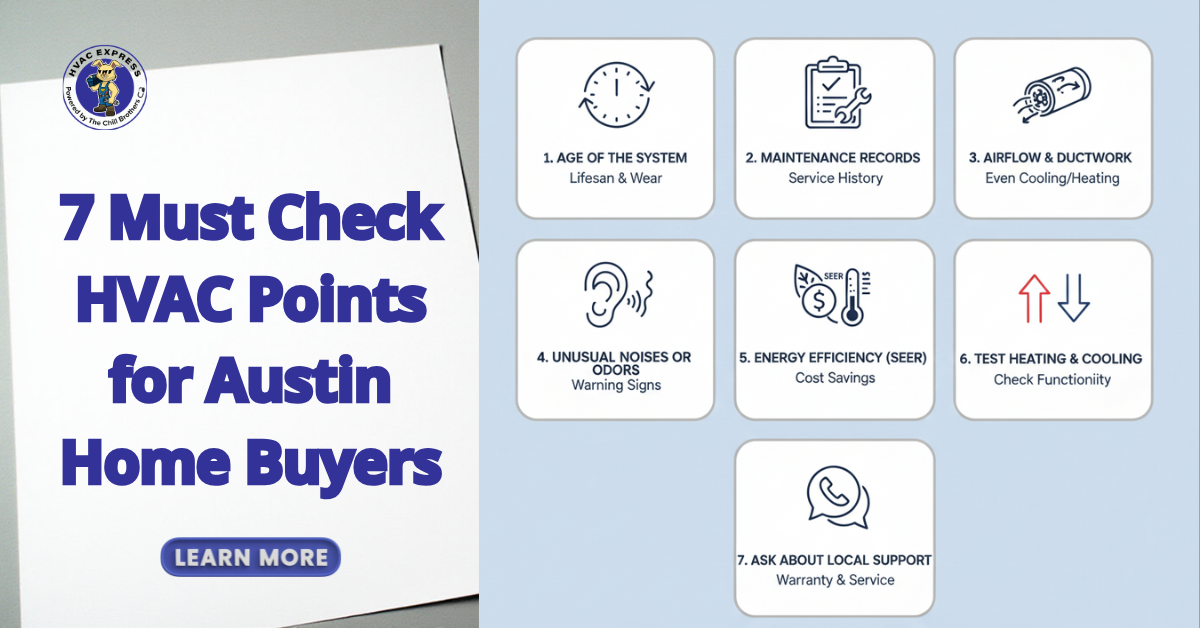
7 Things To Check In HVAC Before Purchasing A House
I looked at the countertops, the flooring, even the closet space when I toured homes, but I wish somebody had told me to scrutinize the HVAC system as thoroughly. That’s easy to forget about, particularly if it’s humming along quietly in the background. However, when this can save you thousands of dollars in the future, a couple of checks are a good idea. This is what I learned to seek, and you should as well:
1. Age of the System
Ask how old the HVAC unit is. Systems can last a decade or 15 years with proper upkeep. If it is pushing its luck towards the end of that range, consider the costs of a future replacement. Additionally, a newer unit may also provide improved energy efficiency.
2. Maintenance Records
A good system should have a maintenance log. Servicing is more frequently rendered twice a year, minimum. No records? That’s a red flag. I walked away from a deal once just because the seller did not have a service history.
3. Airflow and Ductwork
On a walkthrough, turn on the system, and you should feel air blowing in each of the rooms. If the house cools unevenly or the airflow is weak, it may indicate a duct system problem or a struggling unit. A lesson you do not want to learn about two days after you move in.
4. Unusual Noises or Odors
Weird noises like scraping, clanging, and grinding are usually a sign that something is wrong. Strong mold or musty smells can indicate high moisture, or burning odors, a potential electrical problem. Always trust your senses.
5. Energy Efficiency Ratings (SEER)
The higher the SEER (Seasonal Energy Efficiency Ratio) rating, the more efficient the system. The minimum in Texas is SEER 14, but many homes have SEER 16+ units, providing you with a serious way to lower your utility bills.
6. Test Heating and Cooling
Even if it’s summer, check the heater and the other way around. One time, I went to a house where the heat had been broken for years, and the owners had no idea. It’s better to discover it now than in January.
7. Ask About Local Support
Identify who installed and took care of the system. If it were some trusted source like HVAC Express, that would be a good sign. They are actually quite reputable for HVAC in Austin. Additionally, they can assist you with assessments in case you aren’t sure.
When to Call An HVAC Professional
Judging by the walk-throughs that you may see, you are only going to be able to identify so much. So, you must call in a professional before putting in your offer. I cannot emphasize how much it will be worth it. While the piping on the HVAC might appear to be in good condition, after the technician took a closer look, they might find that the components were worn and were on the verge of failure and would completely fail within a year. The one phone call can save you $2,000 in HVAC repairs.
Signs that it is time for your plumbing experts
- Seller’s vague answers about the system’s history or the absence of any maintenance records
- Particularly, the consistent difference in temperatures from room to room
- Clunking or groaning noises when the HVAC kicks on
- A stale odor, which means there is likely mold in the ductwork
- An unfamiliar or outdated brand of HVAC equipment
It is especially helpful to get an inspection from a good local expert. HVAC Express is a reputable local expert near you (if you just moved here). They are aware of the typical problems Austin systems encounter, from dust accumulation to wear from humidity. And if something goes wrong after you move in, you already have somebody to call for fast and reliable HVAC services in Austin.
It’s much cheaper to spend some now for peace of mind than to end up paying all that plus a surprise later, some other hidden costs, or an unusable summer night.
What to Ask the Seller or Inspector
As you stroll through a home, it is easy to get caught up in how a space feels, but I assure you, the smart buyer asks the right questions as well. I even began writing up a checklist on my phone for just the HVAC system. This helped me identify red flags in the early stages of communication, and also provided me with peace of mind when things seemed to be in good shape.
Here are the questions to ask:
1. What kind of major repairs or replacements have had to be made?
It’s not always a red flag that a compressor or motor is replaced. It may mean the previous owner took care of it ahead of time. However, if you notice a pattern of recurrent repairs, the system could be toward the end of its life.
2. Who put the current one in, and is it under warranty?
You should also get a sign from a reputable installer like HVAC Express. Moreover, ensure whether parts or labor are under warranty. That way, you could avoid unplanned expenses in case something fails after you move in.
3. Do you have any repeating problems in extreme seasons?
Find out whether the system has a hard time cooling in the hottest parts of summer, or heating when it is frigid outside. Summers in Austin are not particularly forgiving. If the current owner relied on fans or window AC units for cooling, that is a sign of trouble.
These questions not only indicate you mean business they are designed to avoid surprises and make educated decisions. If you do your homework, this will not only impress sellers but also give you a greater ability to guide your inspector by knowing what to ask.
However, if your HVAC system has not had a tune-up in some time, be sure to make it a priority.
Preventative Maintenance
An important aspect of the long life span of a system. After a year of time lapsing without any check-up, a lot can lie hidden just waiting to manifest itself. A fresh inspection of the system indicates that it has been properly maintained.
Final Notes
Purchasing a house in Austin is a massive deal. It is one you need to live at ease with. And although it would be simple to focus on square footage, paint colors, or kitchen improvements, the HVAC system is what truly keeps your house livable through the blistering summer season and a rare chill snap.
I discovered as a new homeowner that even a 10-minute HVAC inspection could literally convert moving into your new home from a joyous occasion into a financial nightmare. Trust your gut, ask the appropriate questions, and call in the experts like HVAC Express as your support.
Not only do you buy a property, you buy comfort, security, and peace of mind. So, before you ink that dotted line, ensure that your HVAC is more than up to the task. Austin weather won’t wait.
FAQs
What Is The Average Lifespan Of An HVAC System In Austin’s Climate?
HVAC systems in Austin typically last 10-15 years. Heavy use due to high heat and humidity can shorten this. Regular professional maintenance is key for longevity.
How Can I Improve The Energy Efficiency Of An Existing HVAC System In An Older Austin Home?
Improve efficiency by sealing and insulating ductwork, upgrading to a smart thermostat, and ensuring regular filter changes and professional tune-ups. Also, check home insulation and windows.
Are There Specific HVAC Rebates Or Incentives Available For Austin Homeowners?
Yes, Austin Energy and state/federal programs often offer rebates and incentives for energy-efficient HVAC upgrades. Check the Austin Energy website or contact us for current information.
What Are The Signs Of An Undersized Or Oversized HVAC System In An Austin Home?
An undersized system struggles to cool, running constantly with high bills. An oversized system short-cycles, leading to poor dehumidification and increased wear.
When Should I Consider Replacing Versus Repairing An Older HVAC System In Austin?
Consider replacement when repair costs exceed 50% of a new unit’s cost, or if the system is over 10-12 years old and frequently breaks down. A new unit offers better efficiency and fewer future costs.


