


An efficient HVAC system provides comfort in any weather. Whether summer or winter, an HVAC runs to ensure a better indoor environment. However, you cannot expect it to operate for eternity. By operating for years, HVACs become inefficient or even break down.
The life expectancy of any HVAC depends on different factors, such as the brand, amount of usage, climate, and maintenance activities. You can extend the lifespan of your HVAC by ensuring regular maintenance and tune-ups. Rely on HVAC Express to get a healthier system and use it for a longer period.
TL; DR
The lifespan of an HVAC depends on different factors like brand, climate, usage, maintenance, etc. Normally, it operates for 10 to 15 years. But if you regularly check and keep the system tuned up, it will serve you for up to 25 years. So, get help from professionals like HVAC Express and increase the lifespan of your HVAC.
Factors Affecting the Lifespan of Your HVAC
You may notice some inefficiencies in your HVAC system over time. Sometimes different parts of the system break down or sometimes the whole system fails suddenly. It is a concerning issue for homeowners. Different factors determine how long does an HVAC system last. Here are the main factors affecting the lifespan of your HVAC:
1. HVAC Brand
If you pick a non-branded cheap HVAC, it may not serve you longer. Brand matters in the case of the life expectancy of an HVAC. Usually, high-quality brands produce systems that are supposed to serve longer. Some popular long-lasting choices you can pick are:
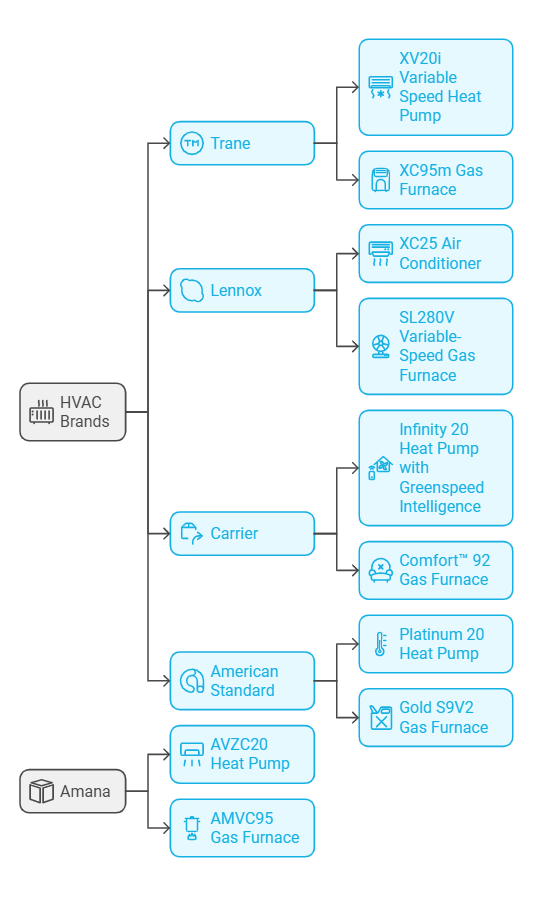
| HVAC Brands | Long-lasting Models |
| Trane | XV20i Variable Speed Heat Pump,
XC95m Gas Furnace |
| Lennox | XC25 Air Conditioner,
SL280V Variable-Speed Gas Furnace |
| Carrier | Infinity 20 Heat Pump with Greenspeed Intelligence,
Comfort™ 92 Gas Furnace |
| American Standard | Platinum 20 Heat Pump,
Gold S9V2 Gas Furnace |
| Amana | AVZC20 Heat Pump,
AMVC95 Gas Furnace |
2. Installation Quality
The quality of HVAC installation is quite important for its health and lifespan. If you install an HVAC in a DIY method or by a non-professional, different issues may arise. The HVAC may not operate efficiently. As a result, you get a shorter lifespan of the entire system.
Rely on experts like HVAC Express to install the HVAC properly. They conduct Manual J and Manual D calculations to find out the perfect size and perfect duct designs specifically for you.
3. Maintenance and Tune-ups
With regular maintenance and tune-ups, your HVAC runs smoothly. The maintenance and tune-up activities include:
- Cleaning all components like coils, filters, outdoor units, ducts, etc.
- Replacement of filters every 1 to 3 months
- Checking and maintaining the refrigerant levels
- Lubricating moving parts
- Sealing leaks
- Monitoring performance
- Conducting bi-annual professional tune-ups.
A smoother operation means an increased lifespan of your HVAC. Hire a professional to conduct the inspections and tune-ups. The HVAC Express is a great option for conducting maintenance activities.
4. Usage and Load
The amount of HVAC usage and the load or pressure on the HVAC impact its lifespan too. If you are staying in areas with extreme weather conditions, your HVAC needs to operate almost every moment. The continuous usage creates pressure on the HVAC which will lead it to wear out quickly.
The opposite is also true. If you do not use the system for a long time and then suddenly use it, this will also strain the HVAC excessively. Overall, any infrequent usage creates extra pressure on the HVAC increasing the possibility of system breakdown.
5. Energy Efficiency and Technological Advancements in Models
The energy-efficient and advanced technology models tend to be durable. As energy-efficient models are designed to save energy usage, they will operate for longer. Also, models that incorporate advanced technologies are designed to cope with any extreme weather easily.
So, these newer and advanced models will serve you longer than traditional HVACs. Check the SEER2 and HSPF2 ratings for higher-efficiency HVAC systems.
Approximate Lifespan of HVAC Systems
“How long does an HVAC system last” is quite a concerning question. It cannot be determined or answered in a fixed time. However, normally an HVAC operates well for 10 to 15 years. If you pick the best-suited HVAC from any good brand and ensure proper maintenance, you can extend the lifespan up to 25 years. Here’s a table showing the approximate lifespan of different components of an HVAC.

| Components of an HVAC | Typical Lifespan (Approximately) | Lifespan With Regular Maintenance (Approximately) |
| Furnaces | 15 to 20 years | 20 to 30 years |
| Air Conditioners (Central Air Units) | 12 to 15 years | 15 to 20 years |
| Boilers | 20 to 25 years | 25 to 35 years |
| Thermostats | 10 years approximately | 10 to 15 years |
| Heat Pumps | 10 to 15 years | 15 to 20 years |
| Ductwork | 20 to 25 years | 25 to 30 years |
| Mini-Split Systems | 12 to 15 years | 15 to 20 years |
| Air Handlers | 15 to 20 years | 20 to 25 years |
| Evaporator Coils | 10 to 15 years | 15 to 20 years |
| Condensing Units | 12 to 15 years | 15 to 20 years |
| Dehumidifiers | 8 to 10 years | 10 to 15 years |
| Heat Exchangers | 15 to 20 years | 20 to 30 years |
Use your HVAC with regular maintenance and sort out small issues immediately. This is how you can increase the life expectancy of your HVAC.
Signs That Your HVACs Lifespan Is Coming to an End
Though an HVAC operates for about 10 to 15 years and with maintenance 20 to 25 years, the lifespan may not always fall in this range. Check if your HVAC is warning you about its ending lifespan with these signs:
- The HVAC experiences breakdowns or various issues frequently and requires repairs
- Your electricity bills are getting higher than usual day by day
- You are experiencing inconsistent temperatures throughout your house
- The system is creating unusual noise
- Output air quality is poor
- The system does not support updated technologies
- You are experiencing short cycling
- The HVAC has crossed 10 years of its lifespan.
If you notice these issues frequently, it is time to get an update. Consult your HVAC technician and get a newer version of HVAC.
Final Thoughts: Increase the Lifespan with HVAC Express
Using HVAC is essential to ensure indoor comfort in your home. Normally, you can use an HVAC for 10 to 15 years. However, the duration varies with the brand you choose, the quality of your installation, your usage, and the quality of your maintenance. If you ensure proper maintenance and tune-ups, an HVAC can serve for up to 25 years.
Consult HVAC Express to conduct regular inspections and maintenance activities. They will sort out any issues, if found, and ensure great performance for a longer period.


