

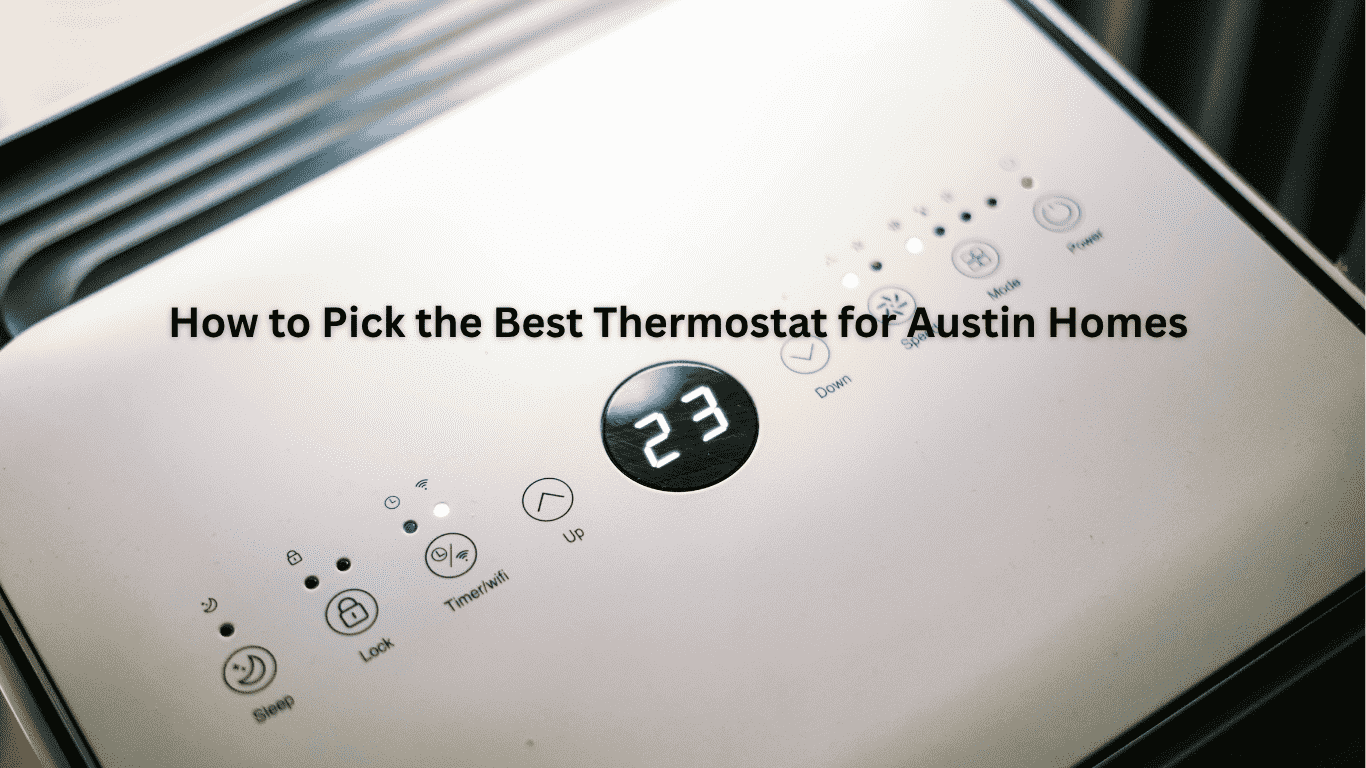
Choosing the best thermostat for Austin homes is essential. Austinites know the weather swings fast, scorching heat one day, humid storms the next. According to the NCEI, Texas saw its warmest year on record in 2024. Since the heat becomes so intense that a suitable air cooling system becomes a must. Your thermostat is the brain of your HVAC system, managing energy use and comfort through all those swings.
But not every thermostat fits every system or lifestyle. So, how do you pick the right one? In this guide, I’ll walk you through the key types, smart features, and Austin-specific tips you need to choose a thermostat that works smarter and saves you money all year long.
Key takeaways:
|
3 Best Thermostat for Austin Homes
Before discovering how to find the right thermostat for your interior, it is crucial to understand the different types of thermostats available with unique features and benefits.
Quick Overview
| Type | Pros | Cons | Best For |
| Manual | Low cost; simple to use | No automation; less efficient | Budget-focused, basic needs |
| Programmable | Energy savings; set schedules | Setup can be tricky | Routine-driven households |
| Smart | Learns habits; remote & app control; integrates with smart homes | Higher cost; may need extra wiring | Tech-savvy, smart home users |
Manual Thermostats
Manual ones are the most basic model among other types. They require manual adjustments, meaning they are not automatic, and you must adjust the temperature directly.
One advantage is that they are cost-efficient. If your house has a manual thermostat and needs a replacement, this could be a good option for you. However, manual thermostats lack energy efficiency, as you have to adjust the temperature frequently.
If you forget to adjust the thermostat when you leave, it can increase energy use and cause common Austin HVAC issues like poor airflow or uneven cooling.
Programmable Thermostats
Compared to a manual thermostat, programmable ones don’t require manual adjustment. You can set temperatures automatically at any time.
Most importantly, you don’t need to remember to adjust the temperature when you’re away from home. They offer more functionalities than manual thermostats, making them more adaptable.
Although they ensure comfort in Austin’s extreme weather, they can be costly. Additionally, programmable thermostats can be difficult to use without knowing the proper settings.
Pairing a programmable thermostat with other energy-saving strategies during Austin summers can significantly reduce costs, without sacrificing comfort.
Nevertheless, I recommend consulting professionals for HVAC services in Austin to ensure the right setup and maximize energy savings.
Smart Thermostats
Smart thermostats come with advanced features like self-learning and remote control. They can connect to your home’s Wi-Fi and access the internet, making them more time-efficient.
You can control the smart thermostat from anywhere using your smartphone via Wi-Fi. Smart thermostats also send notifications when maintenance or replacements are needed and learn your daily temperature adjustment patterns.
While they can be more expensive than programmable and other types, brands like Nest, Ecobee, and Honeywell offer models that are highly rated for handling Austin’s weather and integrating with smart home systems like Alexa and Google Home.
Also, a smart thermostat can help improve comfort and reduce common indoor allergens when used alongside your HVAC system.
If you’re looking for an excellent experience and want to upgrade your lifestyle with modern technology, spending a little extra wealth won’t be a big deal.
8 Key Features to Look for When Choosing a Thermostat
Older Austin homes may need a compatible model and choosing the best thermostat for Austin isn’t one-size-fits-all. To ensure your HVAC system lasts a long time, you need to consider several important factors:
1. HVAC System Compatibility
Whenever you choose a thermostat for your HVAC system, one thing you need to make sure- is the thermostat compatible with your current system? Does the thermostat match the system type, voltage, etc.?
Many older Austin homes use legacy HVAC systems, so homeowners should double-check voltage compatibility before upgrading. If you own a multi-stage system and are unsure which thermostat will fit, contact HVAC Express expert technicians.
2. Energy Efficiency
The best thermostat for Austin should balance energy savings with comfort. You should look for a thermostat that is energy-efficient. Many programmable and smart thermostats offer this advantage.
In fact, according to ENERGY STAR, households with high heating and cooling demands or homes left unoccupied for long periods can cut their annual energy costs by around $100 simply by using a certified smart thermostat. On average, programmable models can help reduce heating and cooling expenses by up to 10% each year.
When installing a new thermostat, make sure to consider features like programmability and learning capabilities for smart thermostats to save energy effortlessly.
3. C-Wiring
Many smart thermostats require a C-wire (common wire) for continuous power. Be aware that C-wire refers specifically to the power wire, not a shared circuit connection, which some homeowners mistakenly assume.
Check if your existing system has one, as it may be necessary for your new thermostat to function properly. If your system doesn’t have a C-wire, you can purchase one separately.
The C-wire is essential for enabling features such as Wi-Fi connectivity, remote control, and other advanced functions that smart thermostats offer.
4. Integration with Smart Home Ecosystems
If you’re interested in turning your home into a smart home ecosystem, look for a thermostat that offers smart features like voice control and automation.
Also, make sure it is compatible with other smart devices in your home for easy integration, such as Alexa or Google Home systems.
5. Wi-Fi Connectivity
This is a crucial feature for easy control of your HVAC system at any time. Smart thermostats offer this feature, allowing you to manage heating and cooling schedules and connect with other smart devices via smartphones and computers.
6. Geofencing and Occupancy Sensors
Smart features like geofencing adjust the temperature based on your location. Occupancy sensors detect the presence or movement of individuals, adjusting the temperature to offer energy savings and maintain comfort for those indoors.
7. Ease of Use
A thermostat should be easy to use, regardless of its type. Each type of thermostat has its own benefits. For example, manual thermostats may have limited features, but they are the simplest to operate.
Programmable thermostats, while offering more features, can be a bit more complex to set up. These thermostats are known for scheduling and automation. Smart thermostats offer the most user-friendly, automatic functionalities. Along with temperature adjustment, you can control the temperature remotely.
8. Budget
Before selecting the right thermostat for your HVAC system, it’s essential to consider both your budget and the features you truly need. Choosing a less expensive option, like a manual thermostat, might save money.
However, it could also mean sacrificing efficiency and long-term benefits. Sometimes, the savings just aren’t worth the trade. Take the time to explore both the cost and functionality before making a final decision.
If you’re unsure which is the best thermostat for Austin’s unpredictable weather, consult an HVAC professional.
Climate-Specific Recommendations for Austin
I have some practical thermostat tips for Austin’s weather, helping you stay comfortable and save energy year-round.
Summer Settings
On hot summer days, to reduce energy consumption, set your indoor thermostat correctly. City of Austis recommends keeping thermostats at 78 degrees in summer for optimal efficiency. When you’re away, set it even higher above 80°F to avoid cooling an empty house.
You can also use alternatives like ceiling fans or closing curtains to boost indoor comfort without overworking your HVAC. If you’re serious about reducing energy waste, consider upgrading to a programmable or smart thermostat that automatically adjusts temperatures for you.
Winter Settings
Since Austin’s winters are typically mild, you can comfortably set your indoor temperature to 68°F during the day. When you’re not home, consider lowering it below 60°F.
Austin Energy notes that even a slight reduction in thermostat settings during cold months can cut energy use since higher settings make your heating system work harder, and that extra effort drives up costs.
This small shift can deliver noticeable savings over the course of the season, especially if paired with programmable schedules.
Essential Thermostat Maintenance Tips for Austin Homes
Neglecting thermostat care can lead to bigger problems, even emergencies. Learn what steps to take during an Austin HVAC emergency and why regular thermostat checks matter:
- Clean the thermostat regularly to prevent dust buildup that can affect sensors.
- Check it during routine HVAC inspections to catch wiring or calibration issues early.
- Avoid constant manual adjustments, excessive changes can wear out components.
- Keep the area around the thermostat clear so sensors can accurately detect room temperature.
- Use programmed schedules or smart settings to reduce unnecessary system strain.
- Ensure the thermostat matches your HVAC system; improper setup can lead to poor performance.
- Teach household members how to use it properly to avoid accidental setting changes.
- Call a professional if you notice malfunctions; DIY fixes can sometimes make things worse.
Why Go for Professional Than DIY Installation
Many people are comfortable installing thermostats on their own. However, models with complex features often require professional help.
As a local HVAC professional, I warn that improper thermostat installation can void manufacturer warranties or lead to system malfunctions.
HVAC experts can easily handle wiring issues and compatibility problems. Therefore, it’s better to avoid DIY installation for more advanced thermostats.
Conclusion
Choosing the right thermostat is essential for keeping your Austin home comfortable and energy-efficient year-round. By understanding thermostat types and key features like HVAC compatibility, wiring, Wi-Fi, and smart sensors, you can improve system performance and lower energy use.
Regular maintenance is just as important to keep everything running smoothly. Whether you opt for a programmable or smart model, focus on maximizing comfort while cutting unnecessary energy costs. For the best results, consult us to find a licensed Austin HVAC professional to ensure your thermostat fits your home’s unique needs and climate.
FAQs
Can Smart Thermostats Work with Older Austin HVAC Systems?
Yes, but check compatibility and wiring, especially if your system lacks a C-wire. Ask an HVAC pro if unsure.
How Soon Will a New Thermostat Save Me Money?
Savings start right away if set up properly. ENERGY STAR smart models can save ~$100/year on heating and cooling.
What’s the Difference Between Geofencing and Occupancy Sensors?
Geofencing adjusts temps when you leave home; occupancy sensors respond to real-time movement indoors. Together, they boost efficiency.
Are There Local Rebates for Smart Thermostat Upgrades?
Yes, Austin Energy offers $30 rebates for smart thermostats. Check current programs before you buy.
How Often Should I Replace My Thermostat?
Typically, every 10–15 years, but if you notice strain or hear unusual sounds, you might need to address furnace noise issues; sometimes the thermostat plays a role.


